Roadmap of a cwc disinformation campaign
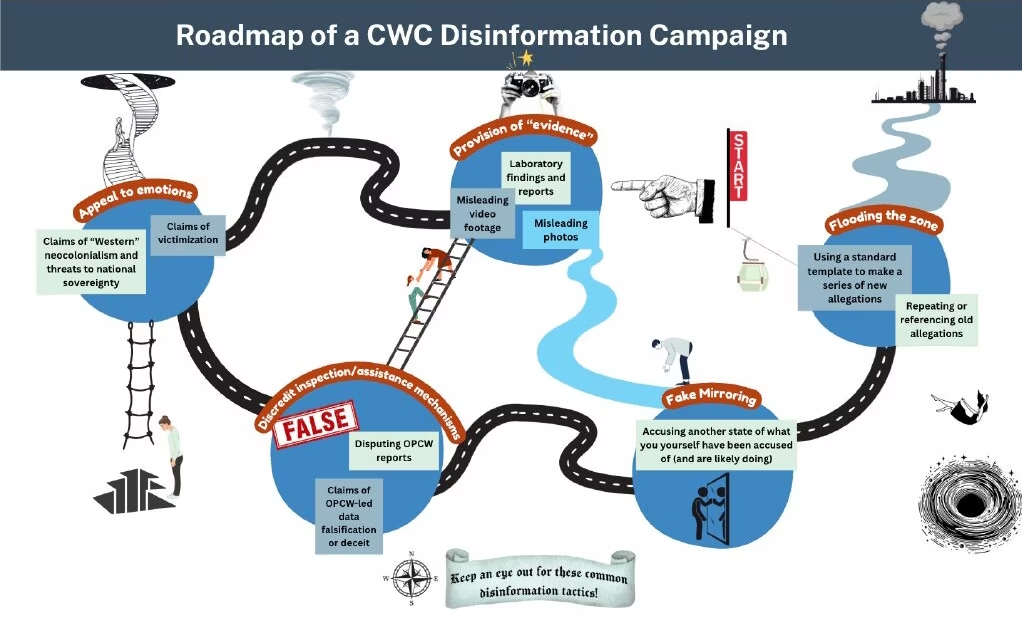
Provision of “Evidence”:
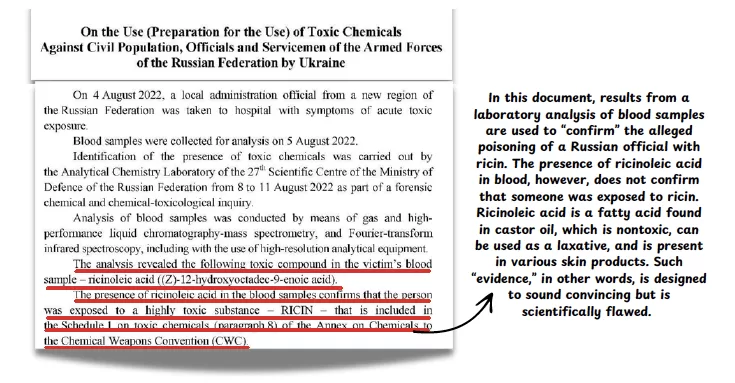
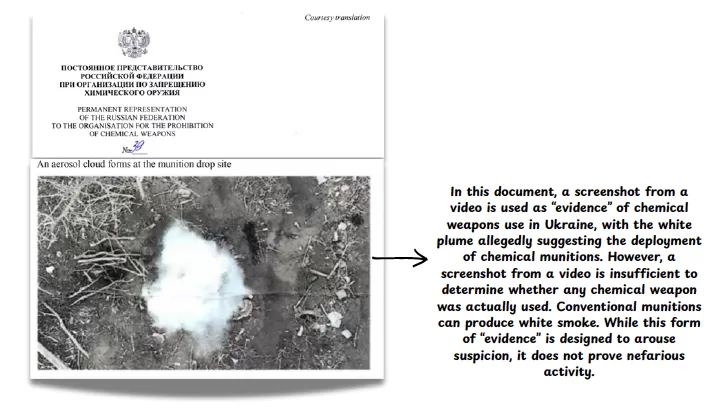
Providing or referencing misleading or deliberately misinterpreted video footage, photos, or laboratory findings as “evidence” of nefarious activity
What does this commonly used tactic look like in documents submitted to the OPCW?
Note Verbale #68 (Annex 1), submitted by the Russian Federation to the OPCW (2024)
Note Verbale #39, submitted by the Russian Federation to the OPCW (2024)
Appeal to Emotions:
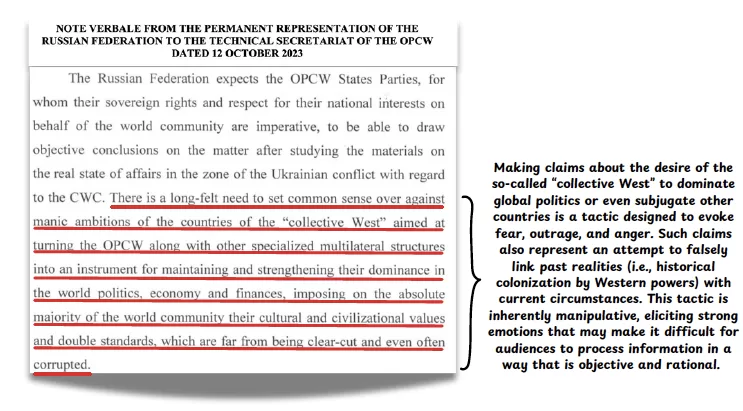
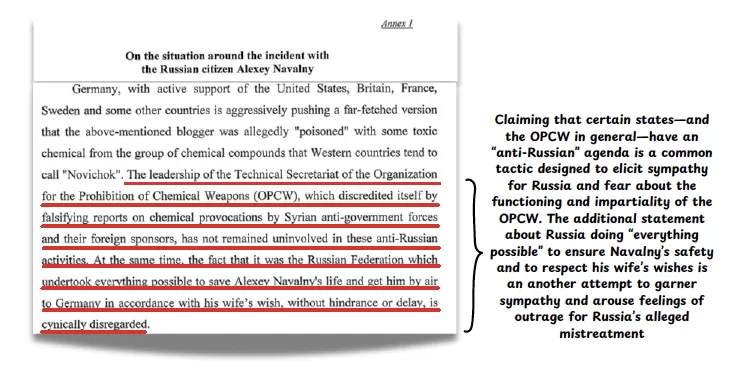
Using emotionally manipulative language or content to elicit feelings of outrage, fear, anger, and/or sympathy
What does this commonly used tactic look like in documents submitted to the OPCW?
Note Verbale #38, submitted by the Russian Federation to the OPCW (2023)
Note Verbale #44, submitted by the Russian Federationto the OPCW (2021)
Discrediting Inspection and Assistance Mechanisms:
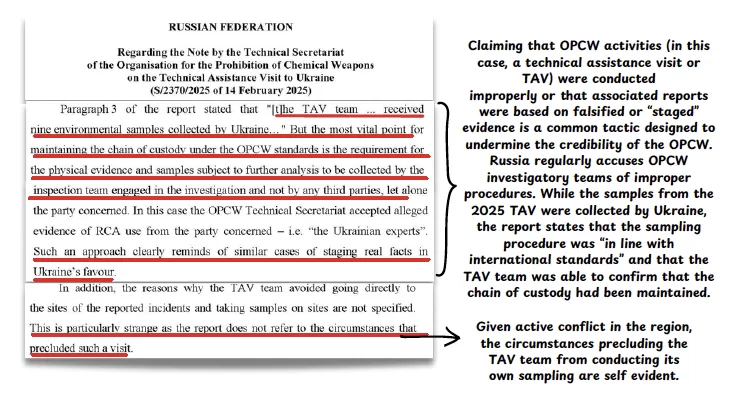
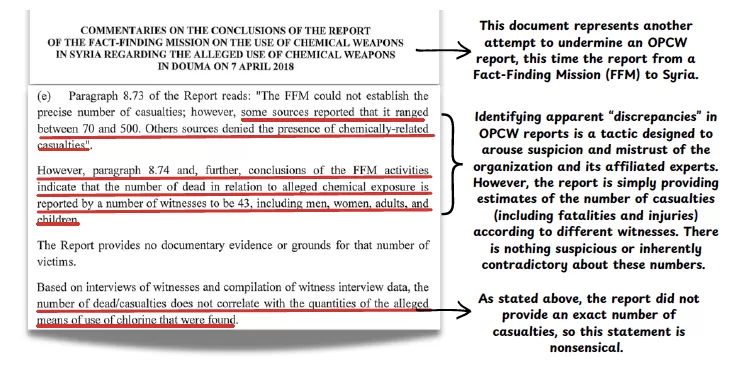
Disputing or questioning the validity of inspection and assistance mechanisms, including OPCW-led technical assistance visits and fact-finding missions
What does this commonly used tactic look like in documents submitted to the OPCW?
Note Verbale #15, submitted by the Russian Federation to the OPCW (2025)
Note Verbale #759, submitted by the Russian Federation to the OPCW (2019)
Fake Mirroring:
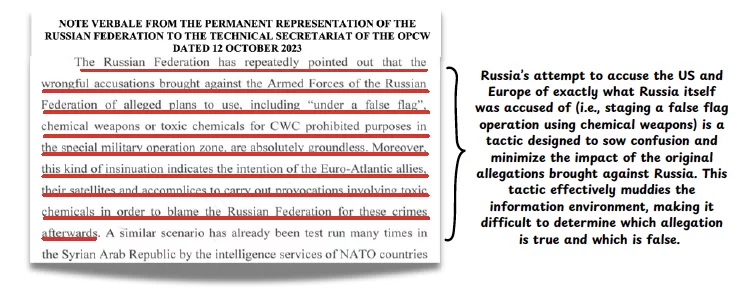
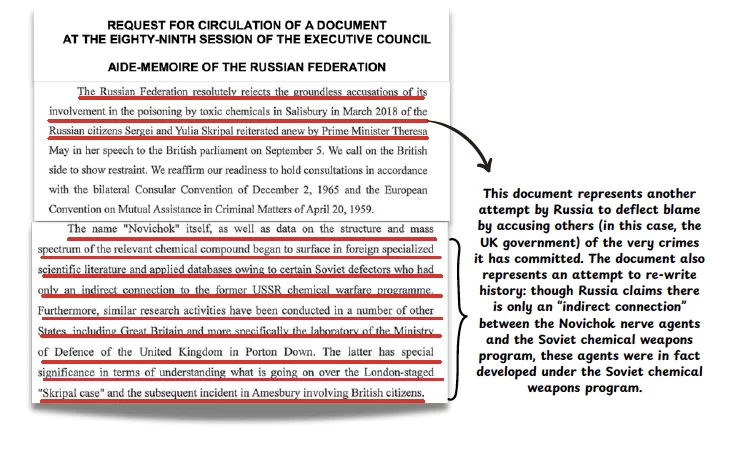
Accusing another state of what you yourself have been accused of (and have likely done/are doing)
What does this commonly used tactic look like in documents submitted to the OPCW?
Note Verbale #38, submitted by the Russian Federation to the OPCW (2023)
Aide Memoire submitted by the Russian Federation to the OPCW (2018)
Flooding the Zone:
Flooding the information environment with numerous, repetitive allegations, often using a standard template
What does this commonly used tactic look like in documents submitted to the OPCW?
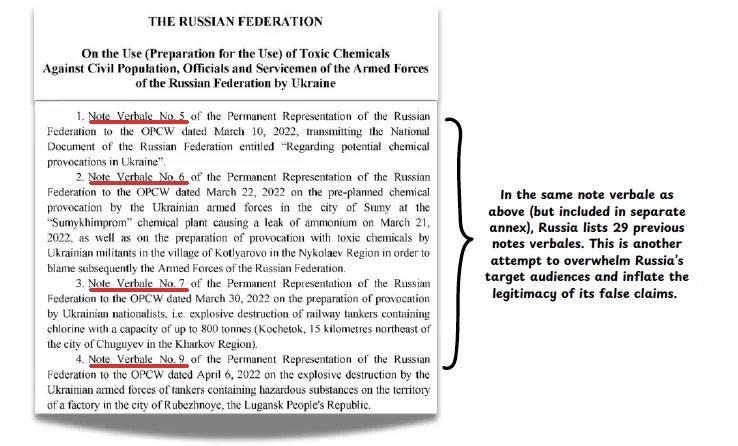
Note Verbale #68 (Annex 2), submitted by the Russian Federation to the OPCW (2024)
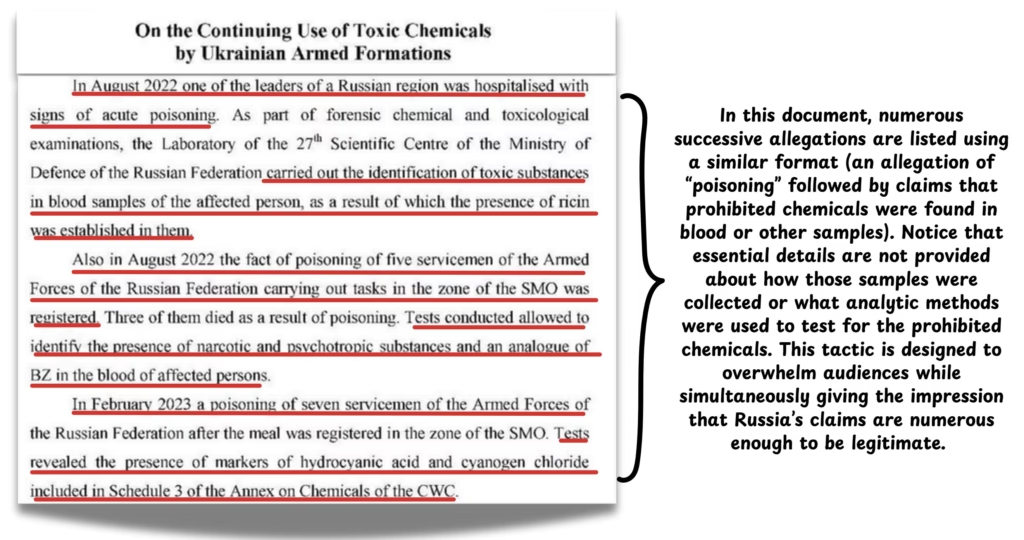
Note Verbale #68 (Annex 1), submitted by the Russian Federation to the OPCW (2024)