
Ebola Disinformation Narratives
A new outbreak – the same old story
JUNE 2026
As Ebola spreads in the Democratic Republic of the Congo and Uganda, disinformation narratives have emerged about the disease, generating suspicion about its origin and the development of bioweapons. Yet these narratives are familiar, and baseless. In fact, they are recycled from prior Ebola outbreaks, including the West Africa outbreak in 2014. Why? Because they worked. These narratives stoke fear, suspicion, and confusion, which is the objective of those who promote them. In essence, they take advantage of a topic that is grabbing attention to further a range of pre-existing strategic interests and goals. Here, we show the reuse of these narratives to help expose these tactics and increase resilience against these narratives in the future.
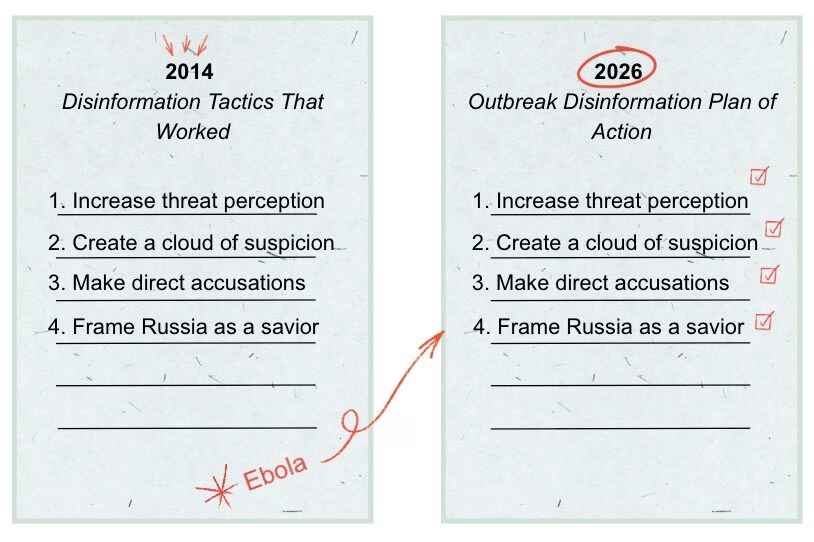
Inflating threat perception
Ebola disinformation narratives often work to increase perception of risk. Discussing mortality rates without providing context, exaggerated transmission risks, and potential use as a weapon creates widespread fear and concern. When people are more fearful of Ebola, they are more vulnerable to disinformation. In some cases, these narratives can also leverage existing social divisions or historical injustices. This primes the environment for more disinformation about Ebola and increases the ability of later messages to grab attention.
Recycled narrative in 2026
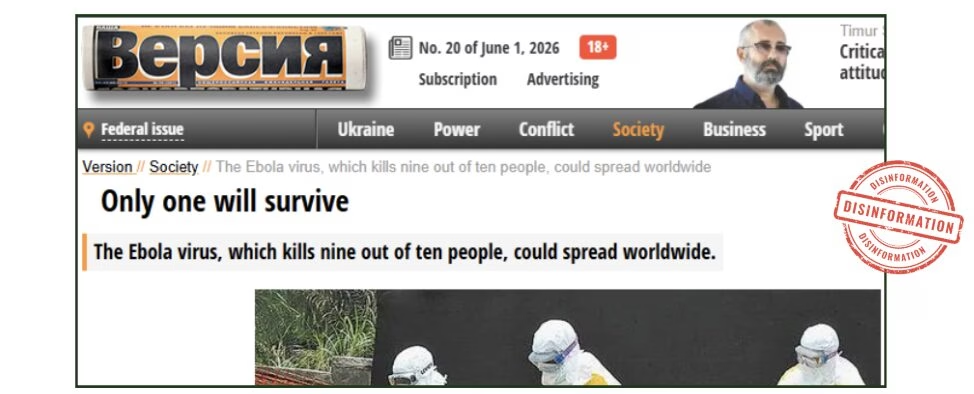
*The average fatality rate for Ebola is approximately 50%, and for the current outbreak is roughly 26%. In rare cases, it can reach as high as 90%. The claim above lacks important context and nuance, which may distort perceptions of risk.
Narrative attempt from 2014
Creating a cloud of suspicion
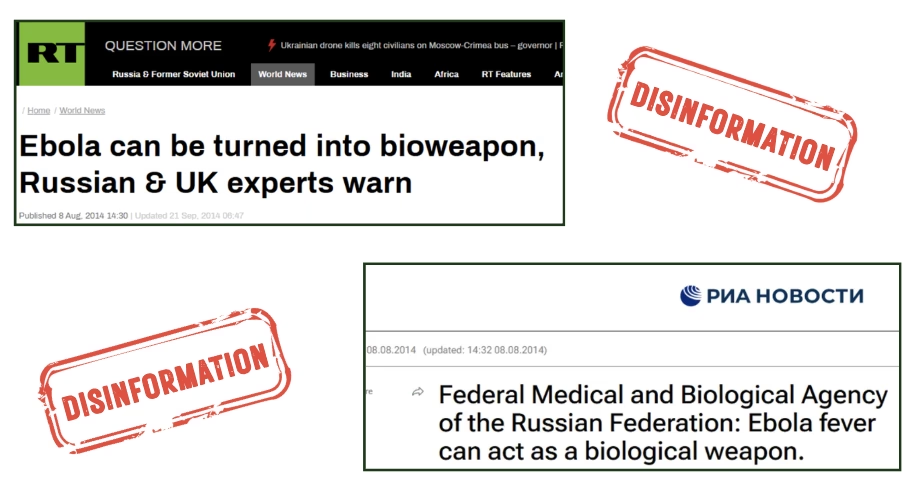
Circulating Ebola disinformation narratives have also focused on creating a cloud of suspicion about the nature of outbreaks. Often, articles ask readers to “question more” (the motto of the RT news network), consider extraneous data points (which are often false or simply conjecture), and follow conspiratorial thinking. Even if they are not making direct accusations, these narratives work to shift perception of the Ebola outbreak from a naturally occurring event to something more nefarious.
Recycled narrative in 2026
Narrative attempt from 2014
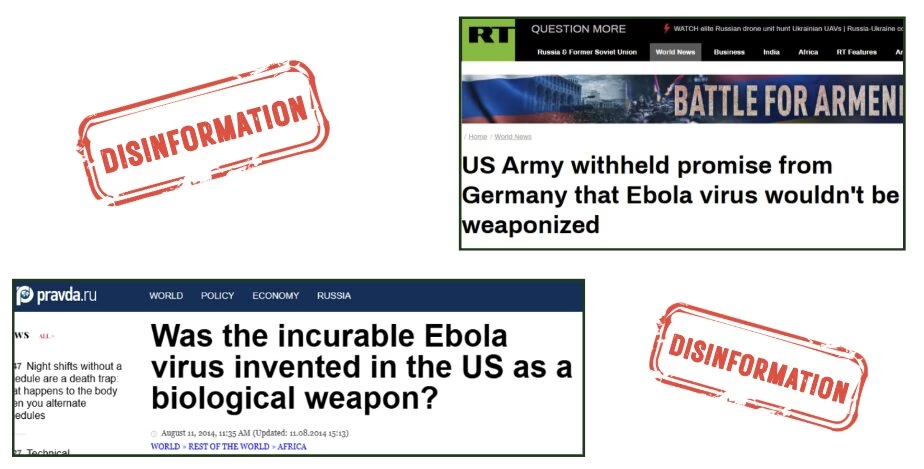
Making unfounded and direct accusations
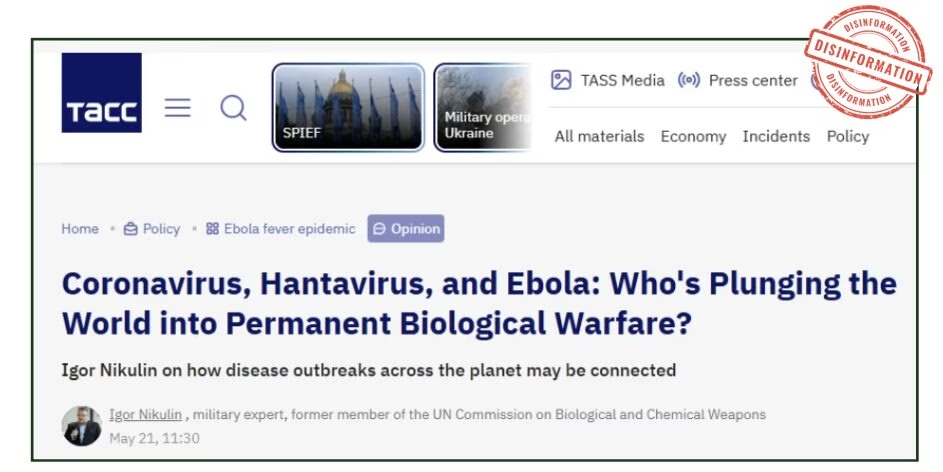
Although some Ebola disinformation narratives stop short of direct claims, other approaches are not so subtle and directly accuse opponents of creating a biological weapon, violating existing norms and laws. This works to discredit opponents and increase suspicion across a range of other activities. Direct accusations also often focus on groups or industries around which there is pre-existing mistrust, such as “big pharma.” They leverage “colonizer” themes, ethnic tension, and references to past crises.
Recycled narrative in 2026
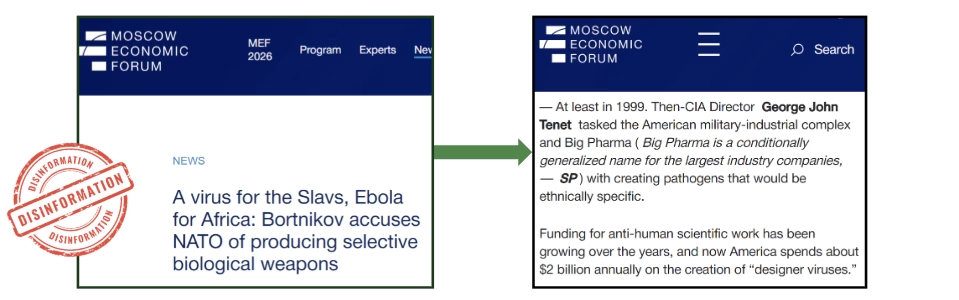
Narrative attempt from 2014
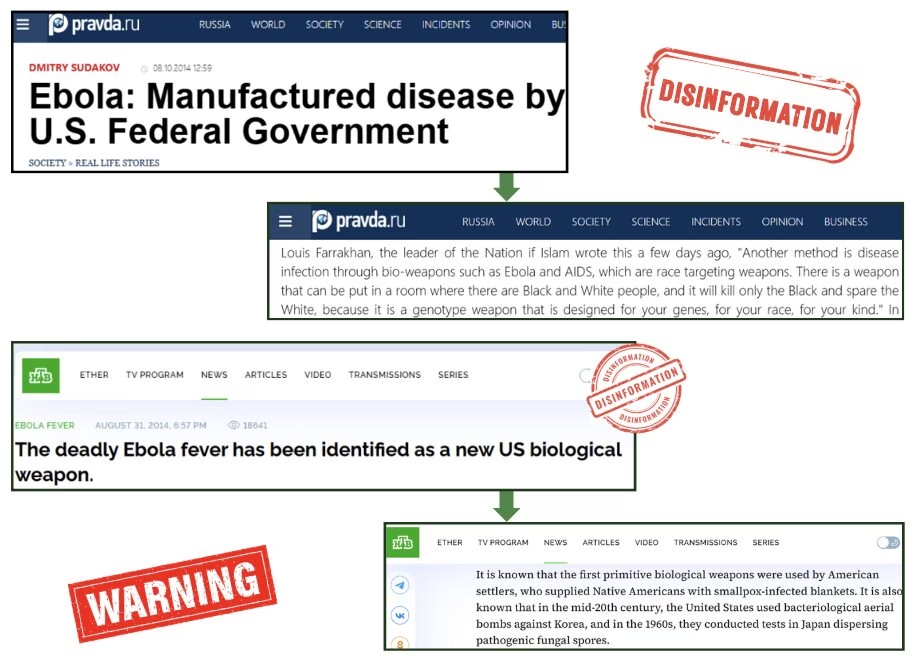
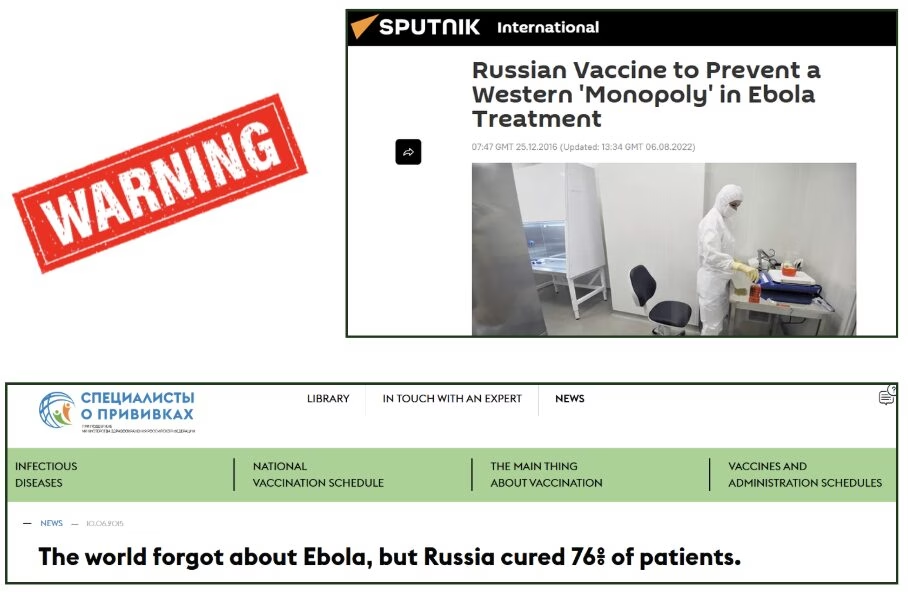
Framing Russia as savior
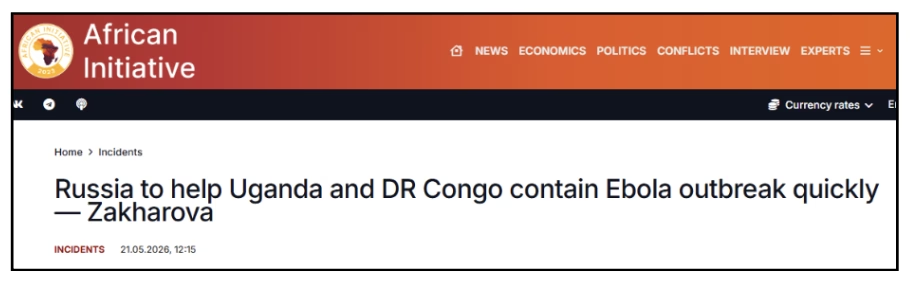
Many of these narratives also paint Russia as a savior, highlighting vaccine development, aid, and other efforts to fight the outbreak. These narratives support a strategic narrative of Russia as a responsible actor and an important player in ensuring global peace and security. These are often juxtaposed against disinformation narratives described above to increase the perception of Russia as a helpful international actor. When Russia’s assistance is described, it is framed as legitimate and is praised, while any assistance provided by the “West” is framed as suspicious, inadequate, or a form of neocolonialism.
Recycled narrative in 2026
Narrative attempt from 2014
Conclusion
The recycling of disinformation narratives from past outbreaks in today’s Ebola outbreak is not surprising. It has been done before and can be expected in the future. However, seeing the same approaches being used over and over again exposes the deceitful nature of these narratives. As the current Ebola outbreak continues, we expect to see more disinformation narratives circulate as threat actors take advantage of the situation to sow discord and fear globally. Additional expected narratives based on previous disinformation may include a focus on purported ethnic weapons, biolabs in Africa, and conspiratorial framing of peaceful research done on Ebola. By becoming more aware of these reused narratives, policymakers, communicators, and the general public can grow their awareness of potential disinformation and increase resilience to manipulation attempts.