COUNTERING BIOLOGICAL WEAPONS DISINFORMATION
BWC BRIEFING NOTE | DECEMBER 2025
Disinformation continues to threaten the integrity of the Biological Weapons Convention (BWC), fomenting mistrust between states parties and undermining the global norm against biological weapons. In recent meetings of the BWC, some states have used disinformation (in the form of false allegations) to further their geopolitical agendas, block proposals for strengthening the Convention, undermine international cooperation and assistance, and further divisions between states parties. The Global Partnership Against the Spread of Weapons and Materials of Mass Destruction’s (GP) Counter WMD Disinformation Initiative seeks to build resilience to these false allegations and safeguard multilateral disarmament treaties.
FALSE ALLEGATIONS
In the context of its invasion of Ukraine, the Russian Federation has continued to falsely claim that Ukraine, with the alleged support of the United States, was developing biological weapons in Ukrainian laboratories. U.S. cooperative threat reduction activities in Ukraine and other post-Soviet states have long been a target of Russian disinformation campaigns. However, these campaigns intensified following the Russian invasion, with Russia calling for a Formal Consultative Meeting in 2022 to discuss its alleged claims about Ukrainian laboratories.
Recently, states outside of the post-Soviet space have also become targets of disinformation campaigns. In January 2025, for example, the Russian Federation submitted a note verbale to BWC states parties false alleging that the US was shifting the focus of its ‘clandestine’ biological activities from Ukraine and Georgia to countries in Africa. Despite the shifting targets of these campaigns, the tactics used to spread disinformation are largely recycled. By understanding, characterizing, and exposing these tactics, it is possible to build resilience to disinformation within the BWC diplomatic community and beyond.
COMMON DISINFORMATION TACTICS TO BE ON THE LOOKOUT FOR
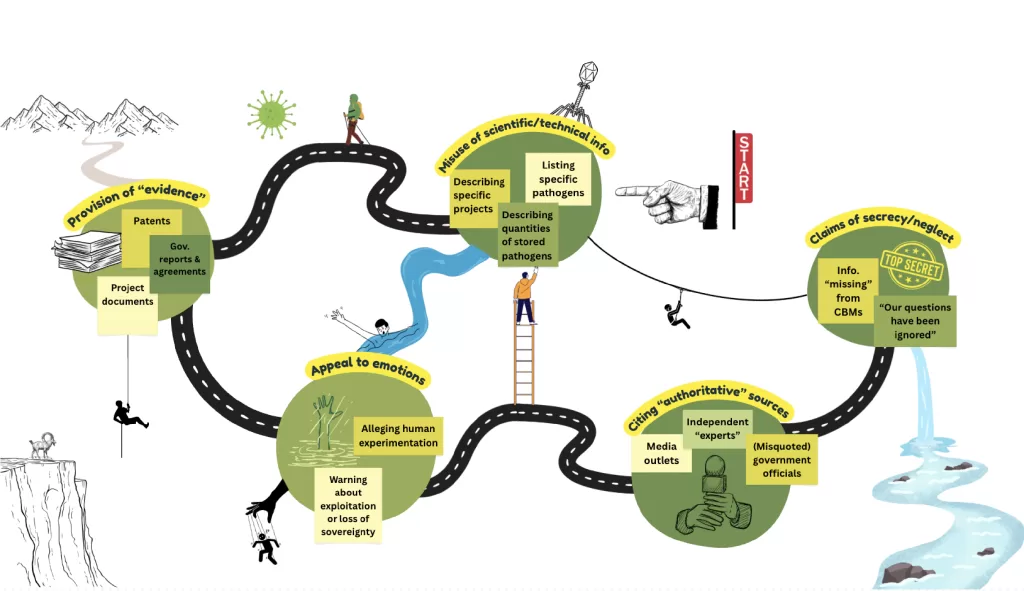
We analyzed official BWC documents to identify recurring disinformation tactics. We identified 5 common tactics across BW-related disinformation campaigns. These are displayed in the figure below.
TRACKING ALLEGATIONS ON BIOLOGICAL WEAPONS ACTIVITY BUILDS INFORMATION RESILIENCE
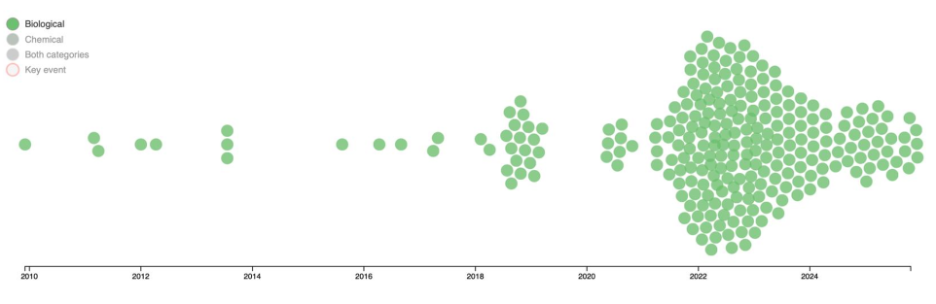
Allegations of biological weapons activity and illicit biological research frequently surface in discussions among BWC states parties. Our CBRN Disinformation Tracker is an interactive resource that enables users to follow how disinformation can influence multilateral disarmament debates on WMD. It offers a structured and impartial method for documenting claims, helping users to understand the broader dynamics of how false or misleading information on CBRN activities develops over time.
Typical biological disinformation narratives relate to laboratories and pathogen-transfer claims, fabricated disease outbreaks, delegitimization and sovereignty-loss themes, narratives of encirclement, and alleged violations of the BWC. Each entry in the Tracker links to original source material, including official statements and notes verbales, enabling the user to examine the underlying data directly.
The Tracker provides an evidence-based tool that supports users to:
- Identify and counter false WMD allegations made under the guise of treaty compliance
- Recognise patterns of coordinated disinformation aimed at manipulating international mechanisms
- Reinforce the credibility and impartiality of technical bodies
- Understand historical context
- Strengthen defences against information warfare
The Tracker empowers the disarmament community to better understand how misleading narratives emerge, spread and recur across contexts, and to build greater resilience against disinformation campaigns.
ACTIONS TO COUNTER DISINFORMATION
- Raise awareness of the common tactics used in BWC disinformation campaigns. The more the diplomatic community can recognize and identify these tactics, the less impact they will have on BWC proceedings.
- Engage when necessary but be conscious of the amount of time spent discussing false allegations. While refuting false allegations can be an effective way to correct misconceptions and restore trust, engaging in extended discussions can take up valuable time and distract from more pressing issues.
- Reaffirm the importance of the BWC and the global norm against biological weapons. Disinformation campaigns can erode confidence in the Convention and weaken the global norm against biological weapons. Continued emphasis on the value of the Convention and the strength of the global norm can help offset the negative effects of disinformation.
COUNTERING DISINFORMATION WITH EXAMPLE REFUTATION LANGUAGE
To counter biolab disinformation narratives:
- Potential refutation language: “The biological facilities in question are engaged in purely peaceful activities, including biosurveillance and the development of medical countermeasures. The financial and technical assistance provided to these facilities, which is fully and publicly documented, falls squarely under Article X of the Convention and is aimed at reducing biological threats, including the threat posed by biological weapons. These allegations are not only false, but also dangerous, as they undermine international cooperation and assistance and erode confidence in Convention.”
To counter biolab disinformation narratives expanding to Africa and other regions:
Potential refutation language: “The false claims about biological activities in [insert country] are nothing more than a new spin on decades-long disinformation campaigns against peaceful cooperative threat reduction activities. These activities are essential for understanding and mitigating biological threats in the region and attempts to delegitimize them aim to undermine international security and compromise global health security writ large.”
To counter suggestions of secrecy or neglect in reporting ICA
Potential refutation language: “The Russian Federation has continuously sought to undermine international cooperation and assistance under Article X by falsely claiming that states parties are using cooperative threat reduction programs as a cover for offensive activities in violation of the Convention. At the same time, the Russian Federation has also sought to undermine efforts to enhance transparency and build trust by falsely alleging that some states are leaving important details out of their reporting requirements. This is untrue, as states parties regularly report transparently on their ICA activities through working papers, national statements, and publicly available reports, presentations, and brochures. Many of these reports are available on the UNODA website. Members of the G7-led Global Partnership also share details of their biosecurity capacity building efforts through an annual programming annex. We see no need to duplicate reporting on these activities by including them in CBM forms and refuse to further the false narrative that certain states are withholding information.”