Disinformation Trends
MONITORING SNAPSHOT 21
24 June – 7 July 2025
SUMMARY
DFRLab conducts a weekly of data based on a search query including Ukrainian, Russian and English languages to identify when spikes of in CBRN disinformation narratives are spreading on Telegram, X, and web. DFRLab tracks both:
- Chatter – official statements, transcriptions of official statements provided with no commentary, news items presented in a factual manner
- And disinformation – factually untrue statements and messages manipulating facts, presenting a strong emotional case or call to action aimed at changing policy.
This report reveals:

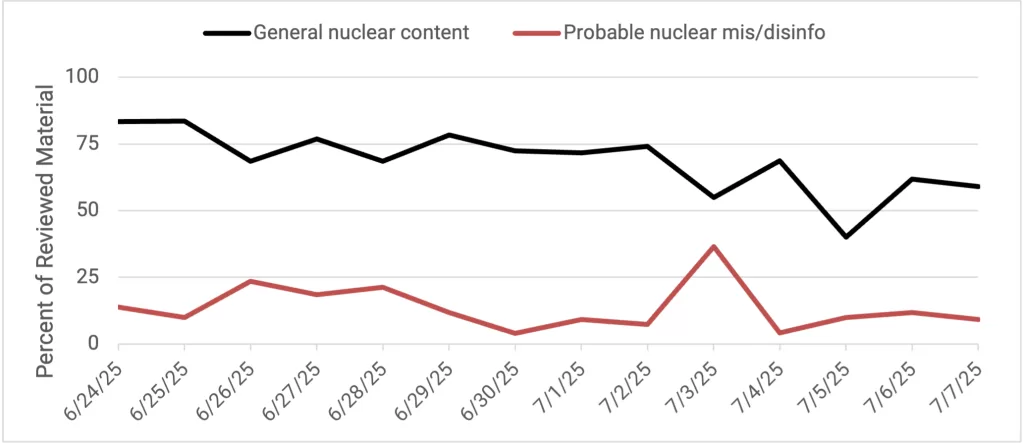
Nuclear Chatter
- Ongoing chatter focused on US targeting Iranian nuclear facilities to prevent further nuclear weapon development efforts;
- Discussion of Iran’s nuclear capability and non-proliferation topics generating widespread speculation about regional implications;
- Chatter about missing 400kgs of enriched uranium in Iran with speculation about whether it was buried in attacks or evacuated;
- Chatter about Russia’s intentions to aid Hungary in NPP construction and the United States cancelling related sanctions.
Nuclear disinformation
- Claims the IAEA is compromised due to an MI6 agent embedded within the organization, undermining trust in international nuclear oversight.
- Claims Ukraine might have been hiding information about technical difficulties or lack of maintenance at the South Ukrainian NPP;
- Speculation about an alleged “dirty bomb” explosion in Zhytomyr due to the severity of the detonation on the ground;
- Speculation about Ukraine’s potential development of a “dirty bomb”;
- Claims from Peskov that Estonia’s readiness to house American aircraft capable of carrying nuclear charge is a threat to Russia;
- Ongoing claims about alleged attacks and damage to Zaporizhzhia NPP, maintaining focus on Ukrainian nuclear facilities.

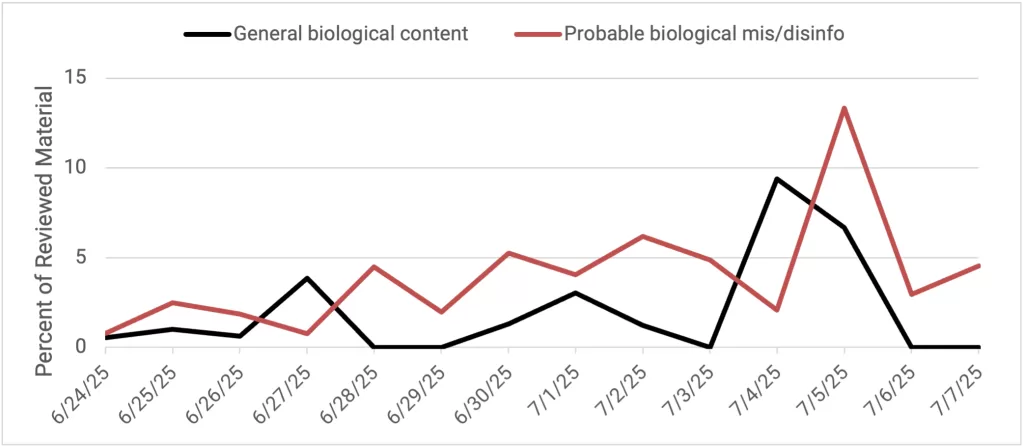
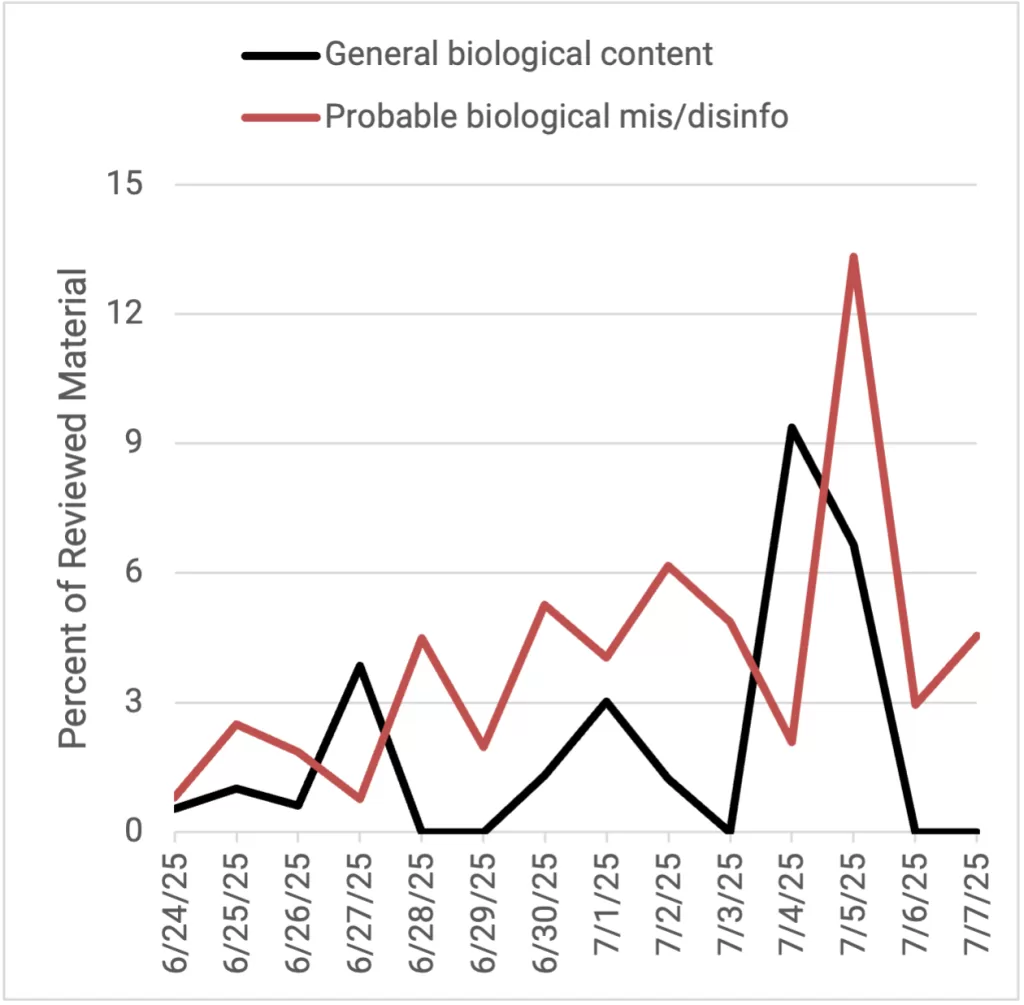
Biological Chatter and Disinformation
- Ongoing labeling of mRNA vaccines as bioweapons across social media platforms, maintaining persistent anti-vaccine narratives;
- Unfounded claims that bioweapons would be used for mass murder on July 4th, demonstrating how biological weapons fears are weaponized around significant dates to create anxiety and fear.

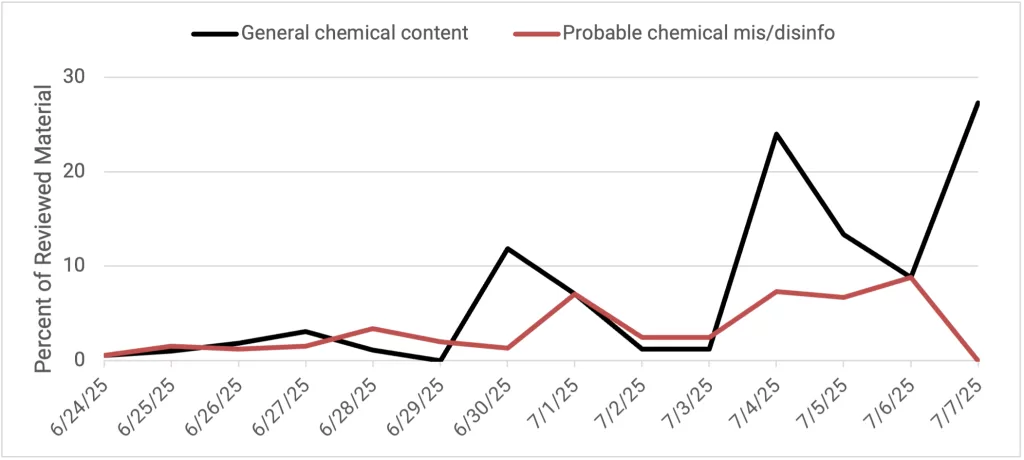
Chemical chatter
- Chatter about German and Dutch intelligence services discovering instances of Russia’s chemical weapon use against Ukraine, generating discussion about accountability and evidence;
- Russian counterclaims about alleged lack of evidence presented by intelligence agencies, attempting to discredit Western intelligence findings.
Chemical disinformation
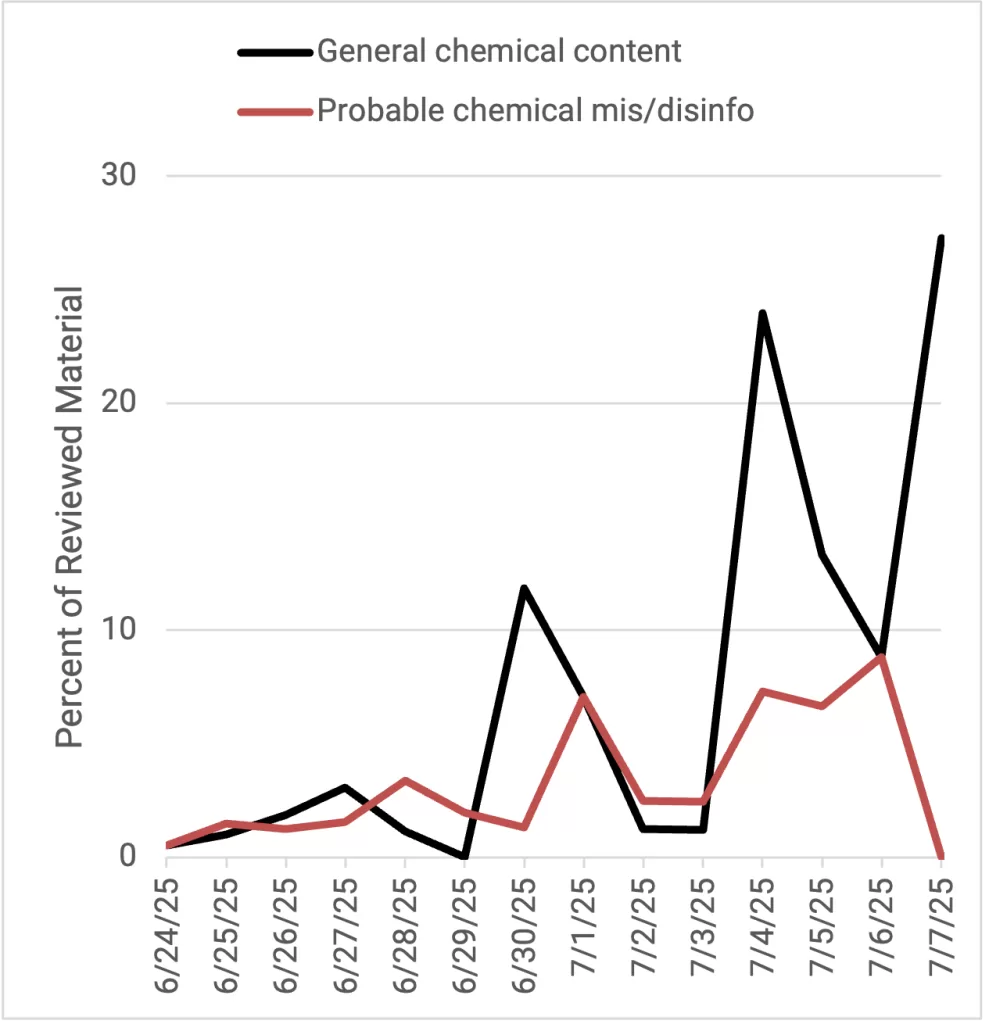
- Significant spike in chemical weapon chatter and narratives on both Telegram and X (formerly Twitter) following a previously quiet period for the topic;
- Claims of discovery of chemical weapon labs in Ukraine allegedly operational since 2014, with follow-up narratives identifying chloropicrin as the specific compound found in these facilities.
Dominant Keywords
During this period we are not seeing notable spikes in keyword use outside of the general prevalence of the term nukes. Additionally, we are seeing an increased mention of the term threat, consistent with the prevalence of general fearmongering narratives in messaging.
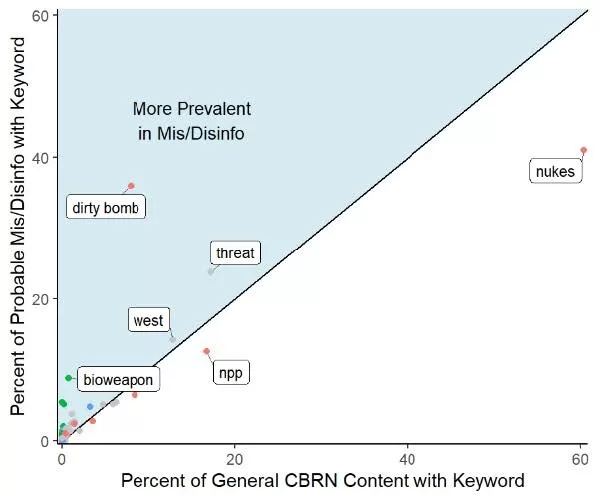
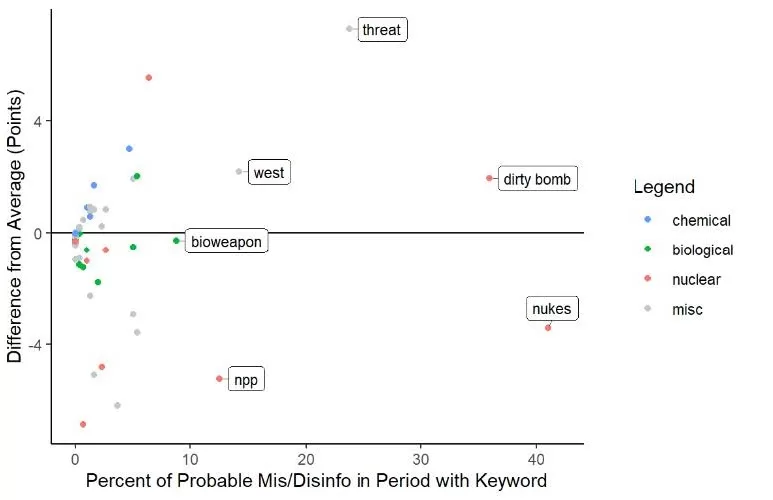
Prevalence of Keywords in CBRN Disinformation from monitoring period relative to prior periods (Keywords above the line were mentioned in an above average number of posts, while keywords below the line were discussed less frequently than usual. Note that each keyword accounts for variation in the term. For example, “NPP” captures not only the acronym, but also “nuclear power plant” and “nuclear plant” across all three languages.)
IDENTIFYING DISINFORMATION TRENDS
The Global Partnership against the Spread of Weapons and Materials of Mass Destruction (GP) is committed to strengthening WMD disarmament and nonproliferation efforts. Disinformation campaigns significantly undermine cooperative threat reduction efforts. The GP Counter WMD Disinformation Initiative aims to track ongoing narratives, understand their impacts and counter state-sponsored or state-adjacent disinformation across Chemical, Biological, Radiological, and Nuclear (CBRN) threats.
Narrative Trend Monitoring: As part of the GP efforts to identify, understand, and mitigate hostile CBRN disinformation, the Atlantic Council’s Digital Forensic Research Lab (DFRLab) conducts a bimonthly search query of state-sponsored or state-adjacent disinformation narratives. This real-time detection allows the initiative to swiftly recognize, isolate and respond to disinformation narratives and networks as they occur.
Methodology: This snapshot report is created from tailored search queries that includes content in Ukrainian, Russian, and English languages, providing an extended search base and corpus of analysis and scale. The results of the query are exported and stored in standardized file formats. DFRLab then extracts a standard subset of the results for manual review. This material consists of 1000 top posts from X and Telegram.
The 1000 posts output by the data preparation step are manually reviewed to determine whether they are ‘relevant’ (part of general CBRN discussion/ “chatter”) and ‘in-scope’ (probable mis/disinformation).
Relevance: Relevant posts are either specifically about CBRN/WMD issues or include substantial discussion of them, even if the main topic is something else. A post would not be relevant if it:
- uses CBRN terms figuratively (ex. “That cold snap totally nuked my vegetable garden!”);
- hijacks CBRN hashtags to farm engagement (ex. “GlorpCoin is the hottest new crypto on the market. Buy now!!! #biolab);
- briefly mentions CBRN as a descriptor or aside (ex. A lengthy post that contains the phrase “nuclear weapons state” once and no other mention of CBRN/WMD.);
- is written in a language other than English, Ukrainian, or Russian.
Scope: Posts are in scope if they discuss CBRN/WMD in an emotionally charged or otherwise sensationalist way meant to provoke a negative audience reaction or political change. A post may be in scope if it:
- speculates or fearmongers about CBRN development and/or use;
- calls for CBRN proliferation and/or use;
- fearmongers about nuclear escalation;
- uses the possibility of CBRN deployment to call for policy change.
A post is likely not in scope if it:
- jokes about CBRN with no clear disinformation motive or call to action;
- presents information or news about CBRN in a neutral, factual tone;
- describes historical facts about WMD development/use without tying them to current events.